

Essential Wood Framing Components for Strong Home Construction
Learn about essential wood framing components like studs, joists, and headers for safe, durable homes. A beginner-friendly guide to framing basics.
Understanding Wood Framing Components for Homes
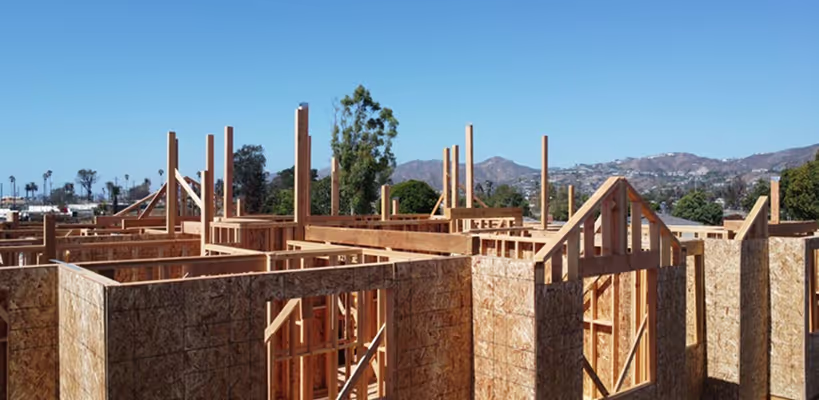
Strong framing is the backbone of every well-built home. Without a solid frame, walls can sag, floors can shift, and roofs can fail. Wood framing is the most common method used in residential construction across the United States because it combines strength, flexibility, and affordability. Knowing the main components of a frame allows homeowners, builders, and DIY enthusiasts to make informed decisions, avoid costly mistakes, and ensure the long-term durability of a structure.
Why Knowing Framing Components Matters
Every piece of lumber in a frame has a structural purpose. From carrying vertical loads to resisting sideways forces, each member contributes to a building’s stability. When framing is done correctly, walls, floors, and roofs transfer weight efficiently from the top of the structure to the foundation. Understanding framing components also helps in planning renovations, estimating material costs, and communicating effectively with contractors.
Studs: The Vertical Backbone
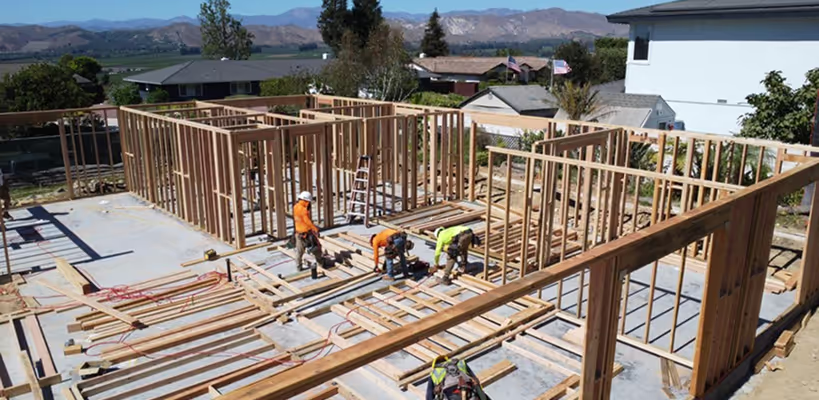
Studs are vertical boards that form the walls of a building. Typically made from 2x4 or 2x6 lumber, studs are spaced evenly, often 16 or 24 inches apart. They carry the weight from the roof and upper floors down to the foundation and provide attachment points for drywall, siding, and insulation.
Specialized studs have unique roles. King studs run the full height of the wall beside door and window openings to support headers. Jack studs, or trimmer studs, hold up headers above doors and windows. Cripple studs fill the gaps above or below openings to ensure the wall is structurally complete. Knowing these distinctions is critical for building walls that are both strong and code-compliant.
Plates: Horizontal Connections for Walls
Plates are horizontal boards that tie studs together. Plates are the same size as studs. The bottom plate, often called the sill plate, anchors the wall to the floor or subfloor, while the top plate connects the wall to the ceiling or upper floor framing. Double top plates are used to distribute loads evenly and create stronger connections at wall intersections. By using two top plates, the walls can have “ears” that hook onto each other. This allows for a stronger connection. Properly installed plates ensure walls remain plumb and aligned during construction.
Headers: Supporting Openings Safely
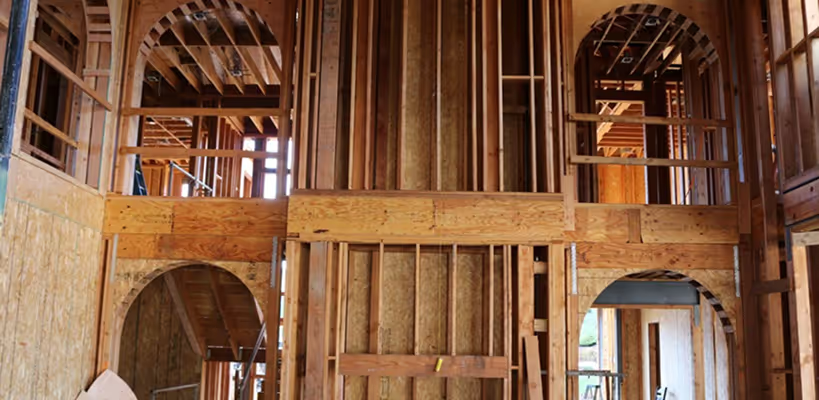
Headers are horizontal beams placed above doors, windows, and other wall openings. Their role is to transfer the weight of the structure above around these gaps to the supporting studs on either side. Headers can be made from dimensional lumber, engineered wood like laminated beams, or steel in high-load applications. Installing headers incorrectly can lead to sagging openings and compromised structural integrity.
Beams and Girders: Heavy Load Support
Joists: Horizontal Support for Floors and Ceilings
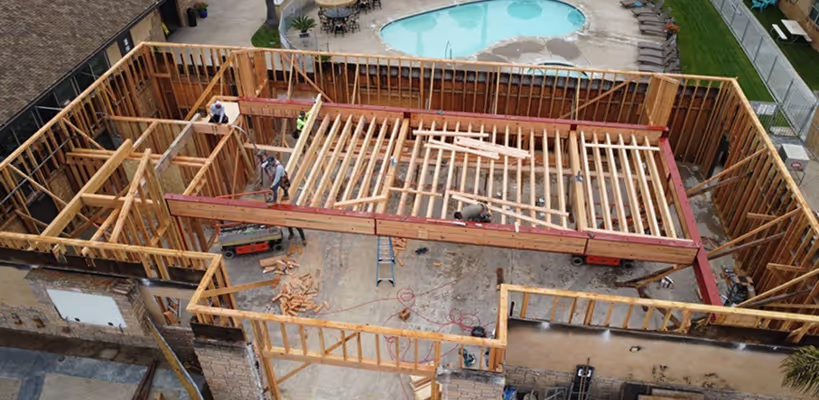
Floor joists span the width of a building to support flooring and distribute loads to foundation walls or beams. They are critical for preventing sagging floors and ensuring comfort and safety in living spaces. Ceiling joists support ceiling materials and help resist outward thrust from the roof. Both floor and ceiling joists can be solid sawn lumber or engineered I-joists, which offer long spans and consistent performance with less material.
Bracing and Sheathing for Stability
Framing does not rely solely on vertical and horizontal members. Bracing and sheathing provide lateral strength, protecting structures from wind and seismic activity. Diagonal bracing prevents walls from racking, while shear panels made of plywood or oriented strand board create rigid walls capable of resisting sideways forces. These components are especially important in areas prone to earthquakes or high winds.
Rafters and Roof Support
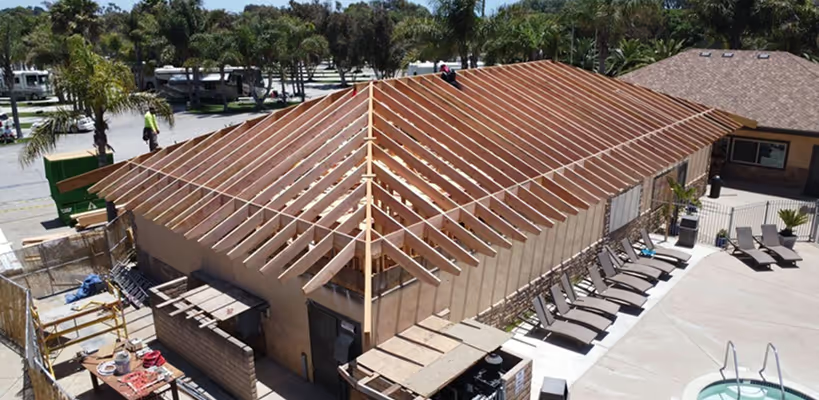
Rafters are sloped members that define the roof’s shape. They run from the ridge beam to the top plate of the walls, creating the pitch needed for water drainage and structural strength. Prefabricated trusses are often used in modern homes to simplify roof construction while maintaining consistent quality. Proper installation of rafters or trusses is essential for roof stability, and errors at this stage can affect the entire building envelope.
Common Framing Terms
Understanding framing terminology is essential for reading plans and ensuring quality construction. On-center spacing refers to the distance between the center of one framing member to the next. Rough openings are framed spaces for windows and doors. Blocking is short lumber installed between framing members to support fixtures, finishes, and to hold studs plumb. Plumb and level describe vertical and horizontal accuracy in framing. Knowledge of these terms ensures the frame is safe, durable, and ready for finishes.
Accuracy and Planning in Framing
Framing accuracy is critical. Studs must be spaced consistently, walls must be plumb, and headers and plates must align properly. Mistakes in spacing or alignment can lead to uneven floors, gaps in finishes, or weak load-bearing walls. Planning the framing layout in advance, double-checking measurements, and verifying angles with squares and levels reduces errors and ensures the final structure is strong and long-lasting.
Conclusion: Framing Knowledge for Better Homes
Understanding wood framing components is fundamental to building or renovating a home that is safe, efficient, and durable. Studs, plates, headers, joists, rafters, beams, bracing, and sheathing all work together to create a stable structure capable of supporting floors, walls, and roofs for decades. Learning the roles and proper installation of these elements allows homeowners and builders to make informed decisions, avoid costly mistakes, and ensure code compliance.
By mastering the basics of framing components, you gain the foundation to evaluate construction quality, communicate effectively on site, and achieve a structurally sound home.
There's More to Know
Let’s Build Something Exceptional Together
Our work sets new standards in construction, where each project is a benchmark of our unwavering integrity and success. Join us as we continue creating innovative structures with established methods that push the boundaries of framing and craftsmanship.