

Edge and Field Nailing Techniques for Wood Framing
Learn edge and field nailing techniques in wood framing. Proper spacing, placement, and code compliance for shear walls, floors, and roof sheathing.
Edge and Field Nailing Techniques in Wood Framing

Nailing in wood framing is not simply a matter of driving nails into lumber. Proper nailing techniques are critical for structural integrity, load transfer, and compliance with building codes. Among the most important terminology is edge nailing and field nailing, which are essential when installing plywood or OSB sheathing on walls, floors, and roofs. Understanding and following this terminology correctly ensures a structure that is safe, durable, and able to resist wind, seismic forces, and everyday loads.
The Role of Plywood Sheathing
Plywood sheathing provides strength and stability to framed structures. It ties together studs, joists, and rafters, creating a continuous surface that resists movement and maintains the integrity of walls, floors, and roofs. The effectiveness of sheathing depends heavily on how it is nailed. Poor nailing can lead to panels sagging, warping, or failing under stress, which is why understanding proper edge and field nailing techniques is essential.
Edge Nailing Explained

Edge nailing involves placing nails along the perimeter of a sheathing panel to secure it to structural members. This type of nailing anchors the panel, prevents uplift, and contributes to the wall or roof’s overall shear resistance. Nails should be driven into the panel surface, penetrating deeply into the framing for maximum strength. Correct edge nailing ensures the sheathing functions as intended and provides the stability required for walls, floors, and roof assemblies.
Field Nailing Explained
Field nailing refers to nailing within the interior area of a sheathing panel rather than along the edges. Its purpose is to distribute loads evenly and strengthen the panel against flexing or sagging. Proper field nailing ensures that the sheathing is firmly attached across its entire surface, helping the structure resist stress and maintain long-term performance. Field nails must be placed consistently and in alignment with structural plans to achieve uniform load distribution and avoid weak points.
Selecting the Right Nails
The type of nail used in framing is just as important as placement. Standard framing nails such as 8d or 10d are commonly used, with galvanized nails for areas exposed to moisture. Ring-shank nails are often applied in floors to provide extra holding power. Always check your plan’s nailing schedule to know the correct nails to use. Choosing the correct nail ensures the frame can handle structural loads and meets code requirements.
Shear Wall Considerations

Shear walls are designed to resist lateral forces such as wind or earthquakes. These walls require precise nailing patterns for strength and compliance with building codes. Edge and field nails must be positioned carefully to maintain the integrity of the shear wall. Incorrect spacing or improper nailing can reduce the wall’s load-bearing ability and lead to failed inspections, making attention to detail essential.
The Importance of Nail Spacing
Nail spacing has a direct impact on the stability of a framed structure. Under-nailing weakens the frame, while over-nailing can damage the sheathing or waste materials. Consistent spacing ensures even load distribution and maintains the structural performance of walls, floors, and roofs. Precision in nail placement supports long-term durability and prevents costly repairs or failures.
Common Nailing Mistakes
Errors in nailing can compromise a structure even if all other aspects of framing are correct. Overdriving nails can weaken the material and reduce holding power, while inconsistent spacing creates stress points that affect stability. Overnailing can damage the structural integrity of framing members such as studs. Nails driven too close to edges or at improper angles may blow out of the wood, reducing the effectiveness of the attachment and creating potential hazards. Avoiding these mistakes is crucial for building a safe and long-lasting frame.
Best Practices for Nailing
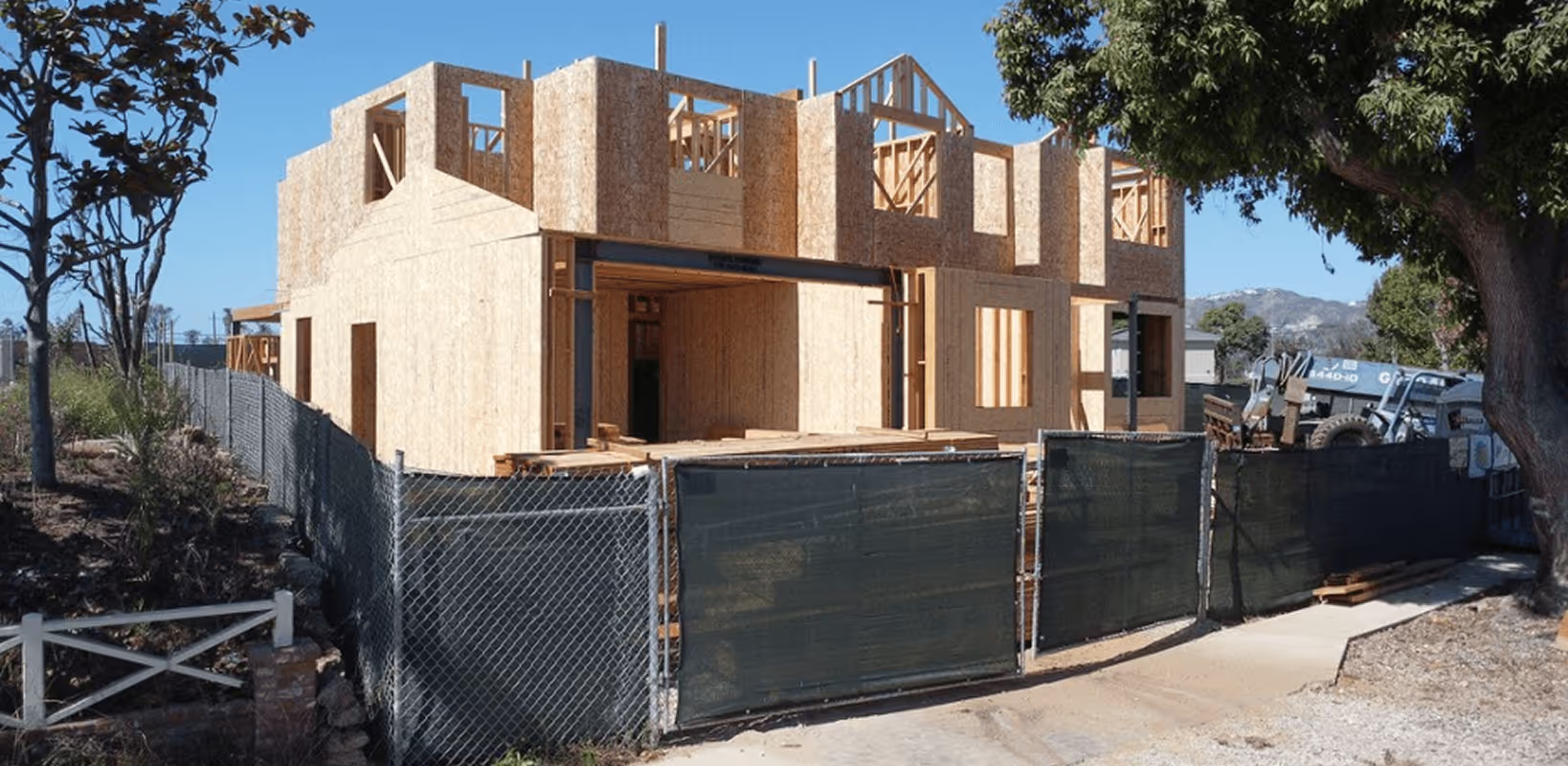
Successful edge and field nailing requires careful preparation. Using guidelines to mark nail lines helps maintain consistency. Verifying the nail type and length before installation ensures compatibility with the sheathing and framing materials. Following structural plans precisely guarantees compliance with engineering requirements. Regular inspection during installation prevents errors from compounding and ensures the frame meets performance and code standards.
Conclusion
Edge and field nailing are fundamental techniques in wood frame construction. Proper placement and consistent spacing enhance the strength of plywood sheathing, support shear walls, and contribute to the overall stability and safety of the building. Mastering these techniques ensures that walls, floors, and roofs perform as intended, protecting the structure from stress, movement, and environmental forces over time. Attention to detail in nailing not only supports long-term durability but also ensures compliance with building codes and inspection requirements.
There's More to Know
Let’s Build Something Exceptional Together
Our work sets new standards in construction, where each project is a benchmark of our unwavering integrity and success. Join us as we continue creating innovative structures with established methods that push the boundaries of framing and craftsmanship.