
How Load Transfers Work in Framed Buildings
Learn how wood-framed buildings transfer loads safely to the foundation. Explore load paths, point loads, and framing support with Franke Construction.
How Load Transfers Work in Framed Buildings
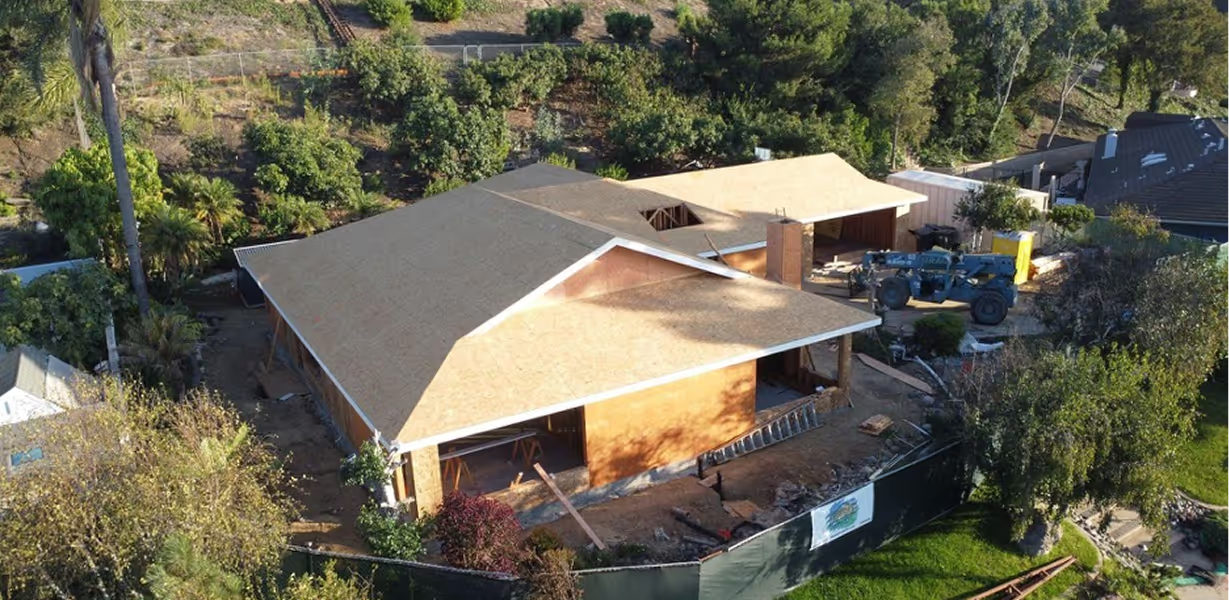
Every building, whether residential or light commercial, must safely handle the weight of its structure, occupants, and environmental forces. Understanding how a building transfers these loads to the foundation is essential in wood framing, and it is a principle that ensures structural stability, safety, and long-term performance. At Franke Construction, we apply these principles to deliver framing that is precise, code-compliant, and built to last throughout Ventura County and surrounding areas.
Load transfer refers to the movement of forces through the structure, starting from the roof and walls, moving down through the framing, and ultimately reaching the foundation. These forces can originate from permanent structural weight, people and furniture, environmental factors such as wind, and seismic activity. Ensuring that loads follow predictable paths is essential for a safe and durable building.
Understanding Types of Loads
Buildings are subject to a variety of loads. Dead loads consist of the permanent weight of structural components like framing, roofing, and flooring. Live loads are dynamic and include occupants, furniture, or temporary roof loads such as snow. Lateral loads act horizontally, typically from wind or seismic forces, and can place significant stress on walls and connections. Point loads are concentrated forces applied at a specific location, such as where a beam rests on a single post. Recognizing and planning for each type of load is critical in wood framing.
What Is a Load Path?
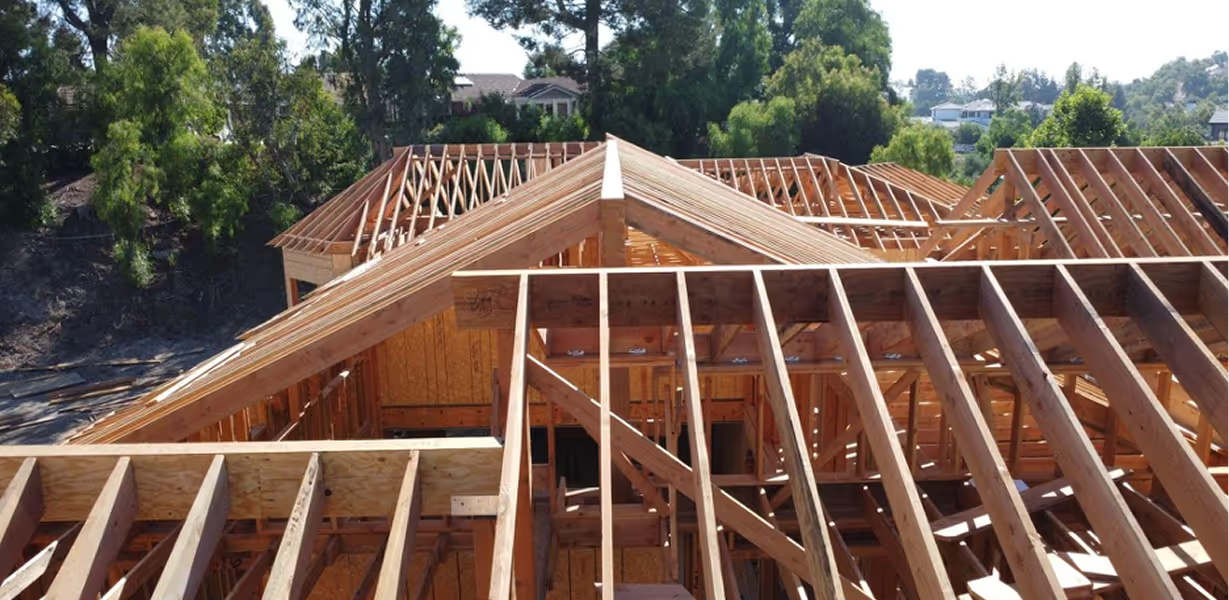
A load path is the route a load follows through the building structure to the foundation. It is the flow of forces from roof to walls, through floors and framing members, and ultimately to the ground. A continuous and predictable load path ensures structural integrity. Any interruption or misalignment in this path can lead to stress redistribution, sagging, or even structural failure.
Vertical loads, including dead and live loads, travel downward through roof trusses or rafters to ceiling joists and then to load-bearing walls. The walls transfer these forces through studs and headers down to the sill plate and into the foundation. Proper alignment of all framing components is essential to avoid weak points that could compromise the structure.
Lateral loads move horizontally and require specialized components to redirect the forces vertically to the foundation. Shear walls, constructed with plywood sheathing and precise nailing patterns, resist these forces and maintain wall stability. Braced frames and diagonal bracing can also help guide lateral loads safely, and anchor bolts or hold-down hardware secure the framing to the foundation, particularly in seismic zones.
Managing Load Transfer at Openings
Windows, doors, and other openings interrupt the natural flow of loads. Headers span openings, transferring weight around the void to jack studs and king studs, while shorter framing members such as cripples support vertical load transfer around these spaces. Correctly framing these openings is one of the most common areas where structural mistakes occur, emphasizing the importance of accurate planning and execution.
Point loads require additional attention. Concentrated forces from beams or roof trusses bearing on narrow supports need reinforced framing using double studs, posts, metal hangers, or engineered lumber. Properly addressing these concentrated loads prevents sagging, cracking, or failure of the framing system.
Framing Support and Load Distribution
Every framing component plays a role in load distribution. Studs transfer vertical forces through walls, joists carry floor and ceiling loads, beams support concentrated weight, and rafters move roof loads downward. Correct sizing, spacing, and fastening of each component ensures the structure performs as intended, avoiding twisting, sagging, or failure. Structural design, load calculations, and adherence to building codes all inform proper placement and alignment of framing members.
Avoiding Common Mistakes

Misaligned framing can interrupt load paths, while under-sized beams or joists may fail under expected weight. Inadequate nailing or poor attachment of shear walls compromises lateral resistance. Attention to detail, following structural plans, and adherence to code standards are essential to prevent these errors and deliver a safe, durable structure.
Conclusion
Understanding load transfers in framed buildings is essential for constructing safe, efficient, and lasting structures. From vertical loads of roofs and floors to lateral forces from wind and earthquakes, every force must have a clear path to the ground. At Franke Construction, we ensure every framing project in Ventura County maintains consistent load paths, proper alignment, and code compliance. Each stud, beam, joist, and connector is installed to support the forces your home or building will experience for decades.
Build with confidence. Build with Franke Construction. For expert wood framing on your next project in Ventura County and surrounding areas, contact us today.
There's More to Know
Let’s Build Something Exceptional Together
Our work sets new standards in construction, where each project is a benchmark of our unwavering integrity and success. Join us as we continue creating innovative structures with established methods that push the boundaries of framing and craftsmanship.