

How to Read Construction Plans for Framing
Learn how to read construction plans for framing. Understand elevation drawings, framing symbols, and layout interpretation with Franke Construction in Ventura County.
Mastering Framing Layout for Residential Projects
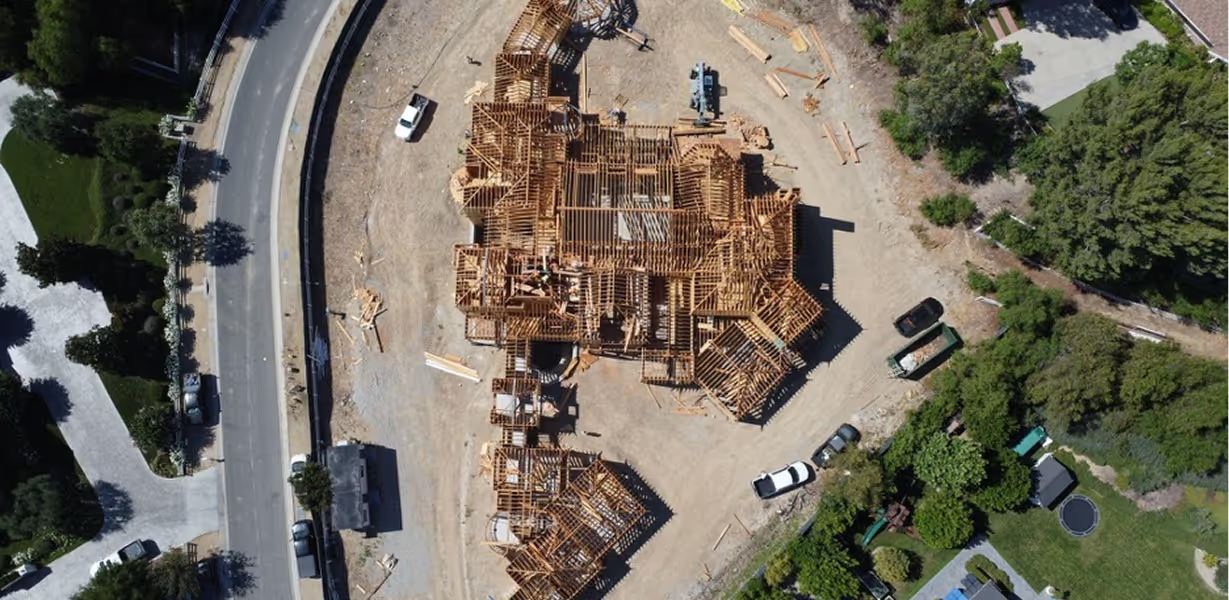
Construction begins long before tools hit the job site. For framers, it starts on paper with the construction plans. Knowing how to read construction plans for framing is essential for every carpenter, contractor, and builder involved in wood framing. Misreading plans can lead to costly mistakes, structural failures, and delays. At Franke Construction, we ensure every framing project in Ventura County is based on accurate and well-understood plans.
This guide explains how to interpret architectural drawings, decode framing symbols, read elevation drawings, and follow a framing layout guide with confidence.
Why Understanding Construction Plans Matters
Before cutting a single stud or laying out a wall, a framing team must first interpret the architectural and structural drawings. These documents contain every measurement, material specification, spacing requirement, and structural element necessary to build a code-compliant structure. By learning to read these plans effectively, framers can visualize the final structure, understand the load requirements, locate walls, beams, and headers, identify load-bearing versus non-load-bearing elements, and execute the layout accurately. Mistakes in reading plans can compromise structural integrity and create inspection challenges.
Overview of Construction Plan Sets
A complete residential construction plan set includes several sheets, each with a different focus. The site plan shows the building footprint, property boundaries, and utility connections. Floor plans provide a bird’s-eye view of each level, showing walls, doors, windows, and framing elements. Elevation drawings depict the external faces of the building, including wall heights, roof slopes, and exterior finishes. Sections and detail sheets provide cross-sectional views to explain how components fit together. Structural plans include framing specifics such as joist direction, beam sizing, and connection methods, all critical for the framing crew. Each sheet serves a unique purpose in guiding construction from foundation to finish.
How to Interpret a Floor Plan for Framing
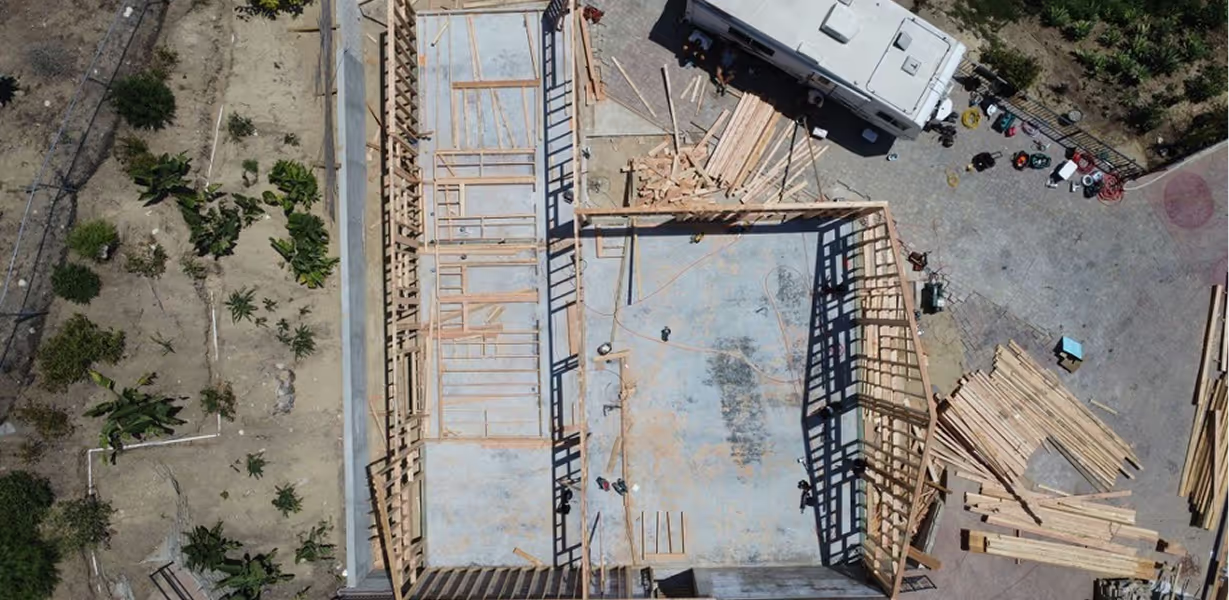
Floor plans are the most commonly referenced drawings in the field. They show the layout and dimensions of rooms, walls, openings, and structural components. Framers use floor plans to identify wall types, stud spacing, door and window openings, beam and post locations, and overall dimensions. Most floor plans are drawn to a scale of one-quarter inch equals one foot. Using a scale ruler ensures accurate measurement when dimensions are not explicitly listed. Following the floor plan precisely ensures walls align with joists and roof elements above, maintaining structural continuity.
Understanding Elevation Drawings
Elevation drawings show the vertical faces of the building, providing information on wall heights, window and door placement, roof pitch, and exterior finishes. These drawings allow framers to verify heights, check for proper alignment of openings, and understand how fascia, siding, and roof sheathing integrate with the overall structure. For example, an elevation may show a gable roof with specific window placements, requiring correctly framed headers and supporting studs.
Reading Framing Symbols and Abbreviations
Construction plans use standard symbols and abbreviations to convey complex information efficiently. Common symbols indicate headers, typical spacing, centerlines, pressure-treated components, beams, trimmer and king studs, and on-center measurements. Structural callouts provide details for beams and joists, such as size, spacing, and spans. Understanding these allows framers to select the correct materials and follow engineering specifications accurately.
Using a Framing Layout Guide On Site
A framing layout guide is a reference that translates construction plans into practical work on the job site. It shows wall layouts, member sizing and spacing, truss or rafter placement, structural connections, and bracing locations. Framers rely on these guides to maintain consistency between plans and construction. Our team at Franke Construction uses detailed layout procedures to ensure plan-to-site accuracy and eliminate errors during framing.
Aligning Framing with Structural Plans
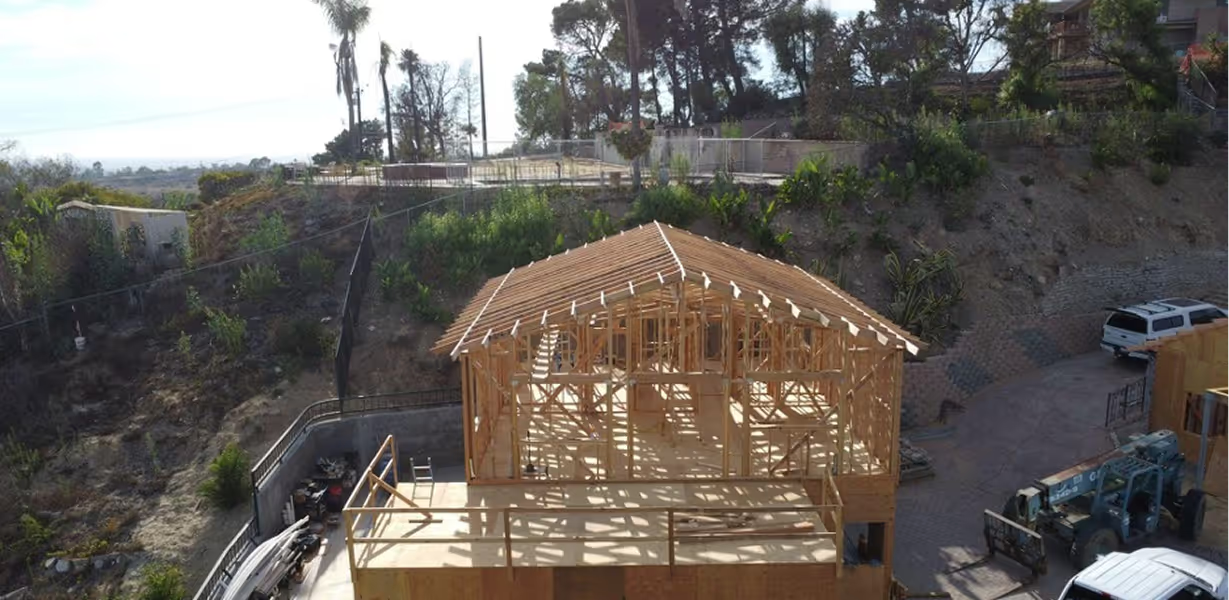
Structural plans add precision to architectural drawings by showing how loads are managed and transferred. They include joist direction and spans, beam locations and sizing, post positions, shear wall requirements, and fastener specifications. Cross-referencing floor plans with structural sheets ensures that all load-bearing elements are placed correctly. Misalignment can compromise the integrity of the entire framing system.
Best Practices for Plan Interpretation
Framers should double-check all dimensions, use the correct scale for each sheet, highlight critical framing details, and seek clarification from the contractor, architect, or engineer if needed. Attention to detail at this stage prevents costly errors, misaligned components, and structural problems during construction.
Common Mistakes in Reading Construction Plans
Framing layout transforms architectural plans into precise measurements and placements that determine the success of a residential project. At Franke Construction, we specialize in framing layout that ensures every wall, floor, and roof is built accurately, strong, and true.
Conclusion
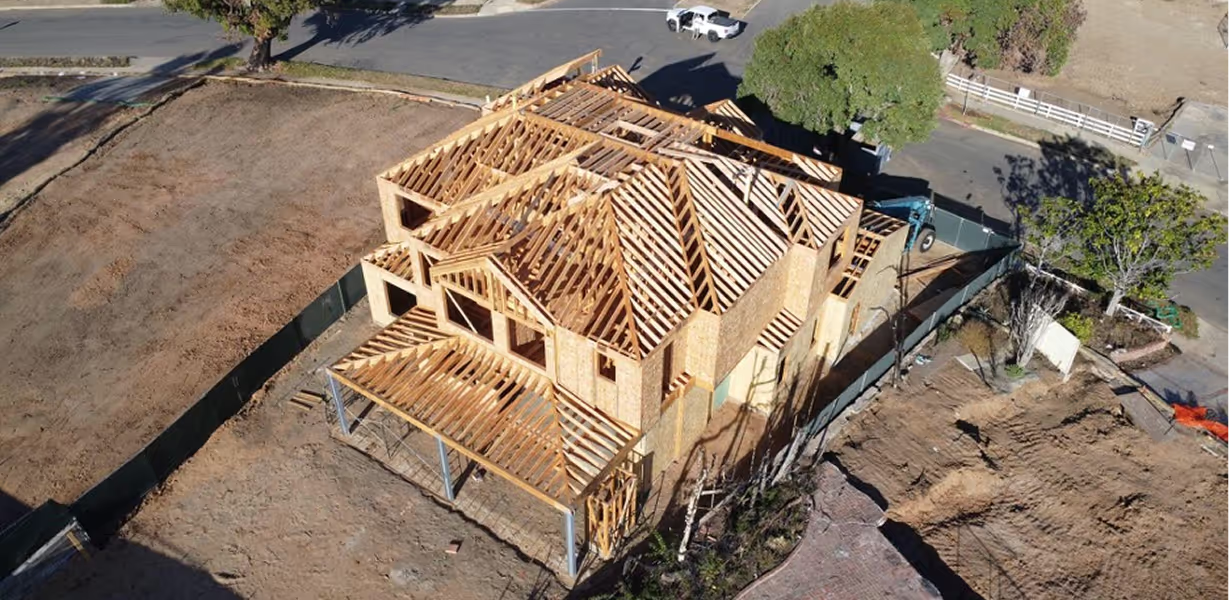
Knowing how to read construction plans for framing is essential for building homes that are structurally sound, code-compliant, and built to last. From floor plans to elevation drawings and framing symbols, every sheet of the plan contributes to the final construction outcome. At Franke Construction, we ensure every stud, beam, and truss is placed accurately according to the plans, providing reliable and precise framing for residential projects in Ventura County.
Build with confidence. Build with Franke Construction. Contact us today to schedule a consultation and ensure your framing project is executed with accuracy and expertise.
There's More to Know
Let’s Build Something Exceptional Together
Our work sets new standards in construction, where each project is a benchmark of our unwavering integrity and success. Join us as we continue creating innovative structures with established methods that push the boundaries of framing and craftsmanship.