

Mastering Framing Layout for Residential Projects
Learn how to master framing layout for residential projects. Explore stud spacing, wall layout, and framing plans with guidance from Franke Construction.
Mastering Framing Layout for Residential Projects
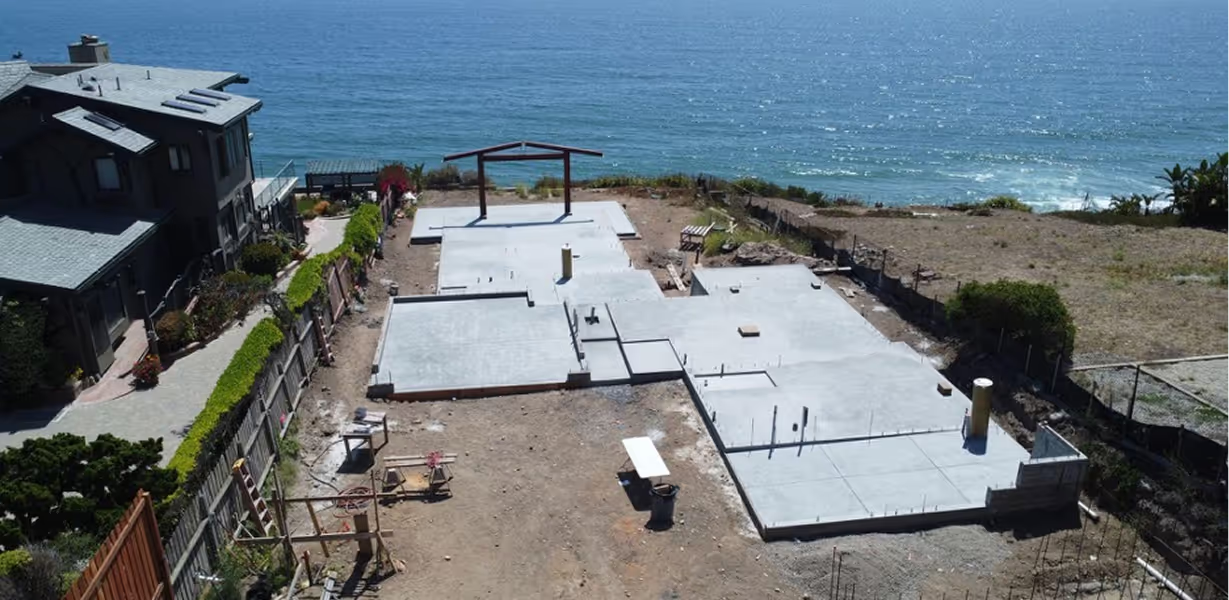
Successful residential construction begins long before a single nail is driven or a stud is cut. It starts with the framing layout, the plan for how walls, floors, roofs, and openings will come together in a structurally sound and code-compliant way.
At Franke Construction, we understand that framing is about more than assembling wood. It requires precision, careful planning, and attention to detail. Framing layout sets the foundation for the entire build, guiding how studs, joists, headers, and beams are positioned, and ensuring walls, floors, and roofs align properly.
What Is a Load Path?
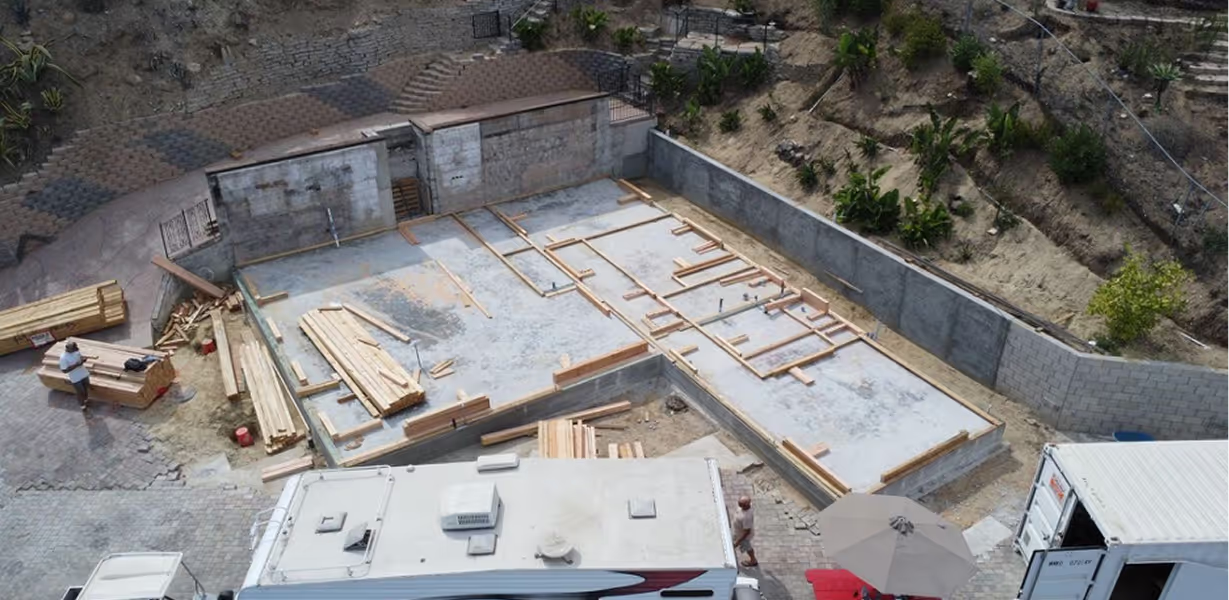
Framing layout is the process of mapping where all structural components of a building will be placed before construction begins. This includes the location of load-bearing and non-load-bearing walls, the placement of studs, joists, headers, and beams, as well as dimensions for windows, doors, and roof alignment. Framing layout serves as a roadmap, guiding the construction team from foundation to finished structure.
Importance of Framing Layout in Residential Construction
A well-executed layout ensures structural integrity, code compliance, and efficient construction. Without a precise plan, walls may be misaligned, insulation and utilities can be difficult to install, and construction errors can lead to costly delays. Proper layout ensures walls align with floor and roof framing, windows line up with support studs, and load-bearing components are placed correctly to manage weight and stress.
Understanding Framing Plans
Framing plans are technical drawings that show exactly how a building should be constructed. They include wall locations, stud spacing, header sizes, beam and joist directions, roof pitch, and floor openings for stairs or HVAC. Elevation views indicate the height and slope of rooflines and other vertical elements. Your framing contractor should refer to a detailed set of plans to map everything clearly before any material is cut.
Stud Spacing and Its Role
Stud spacing is the distance between vertical wall studs and is critical for wall strength, load transfer, and finish installation. Standard spacing is 16 inches on center for most walls, 24 inches on center for non-load-bearing areas, and sometimes 12 inches on center for walls requiring extra strength or heavy finishes. Correct spacing ensures drywall or sheathing panels align with stud centers for proper attachment.
Wall Layout Fundamentals
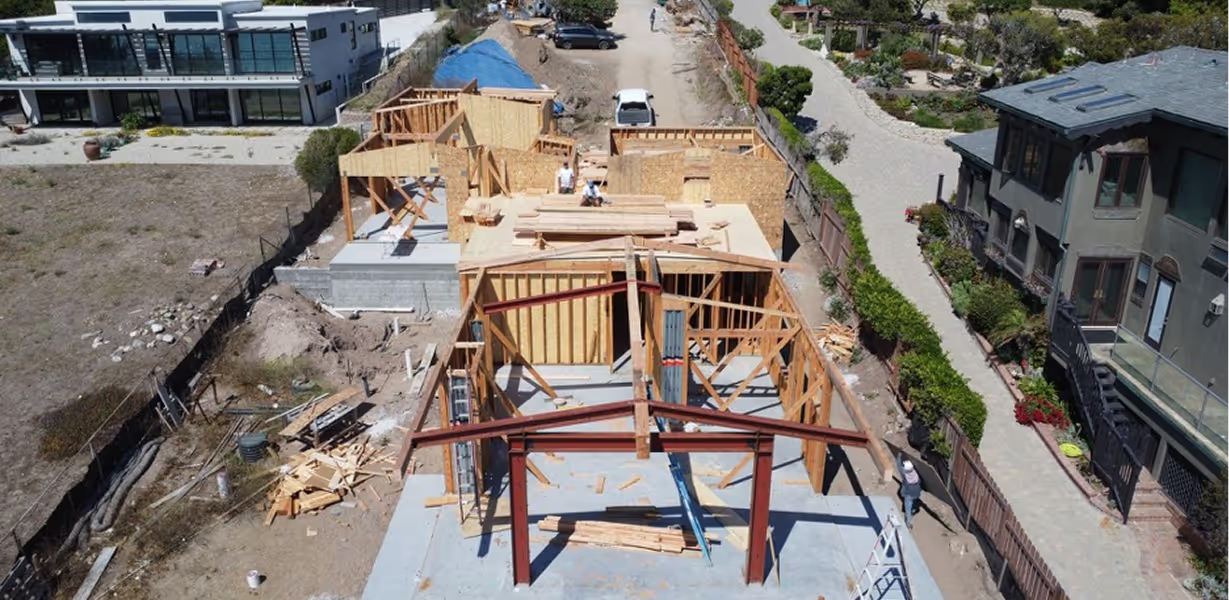
Wall layout is one of the first steps in framing. Walls are marked on the subfloor using chalk lines to indicate their placement. Stud locations are measured along the base plate, and openings for doors and windows are reinforced with headers, trimmers, and king studs. Top and bottom plates guide stud attachment and alignment. Accuracy at this stage ensures plumbing, electrical, and HVAC lines can be installed without obstruction.
Floor and Roof Framing Layout
Floor framing includes joists, beams, and blocking. Proper layout ensures joists span the correct direction, spacing meets load requirements, and openings for stairs or ducts are framed accurately. Roof framing, whether with rafters or trusses, requires precise layout to maintain pitch, support, and alignment. Misaligned roof components can affect load transfer, structure stability, and material installation.
Tools for Accurate Framing Layout
Professional framers use tape measures, framing squares, chalk lines, speed squares, and laser levels to ensure precision in every layout. These tools allow experienced teams like Franke Construction to map entire homes accurately, saving time and reducing errors during construction.
Common Layout Mistakes to Avoid
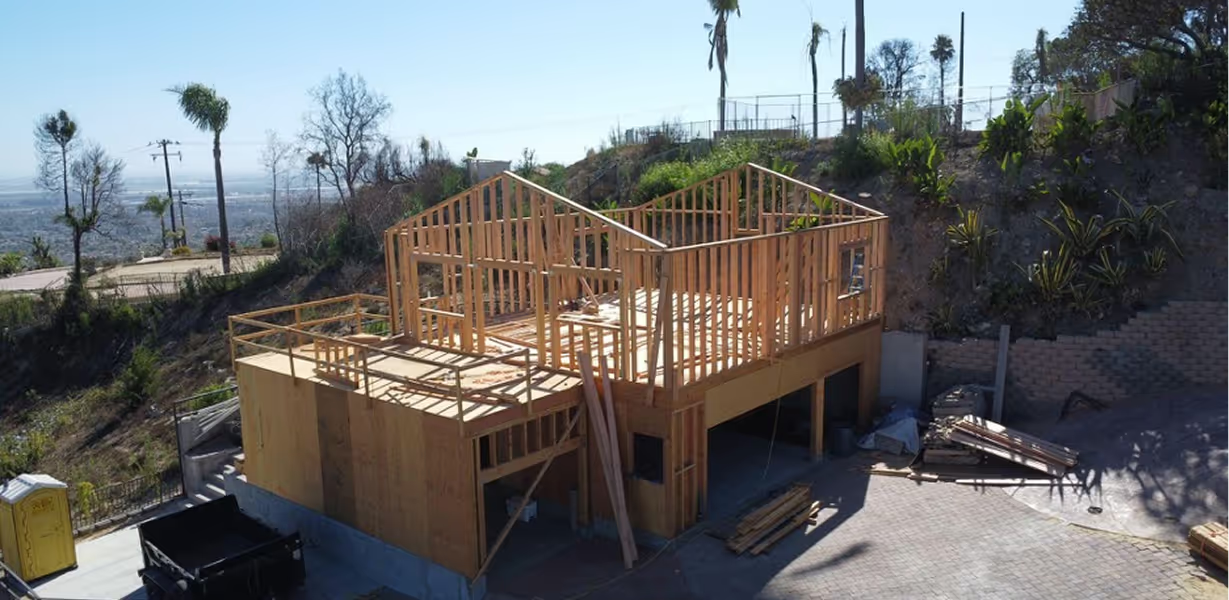
Even small errors can have major consequences. Misaligned studs make sheathing and drywall installation difficult, poor measurements can disrupt openings, and skipping layout steps can create cumulative issues throughout the project. Thorough planning and careful execution prevent these mistakes.
Conclusion
Framing layout transforms architectural plans into precise measurements and placements that determine the success of a residential project. At Franke Construction, we specialize in framing layout that ensures every wall, floor, and roof is built accurately, strong, and true.
For expert framing layout and professional construction services in Ventura County, contact Franke Construction today to start your project.
There's More to Know
Let’s Build Something Exceptional Together
Our work sets new standards in construction, where each project is a benchmark of our unwavering integrity and success. Join us as we continue creating innovative structures with established methods that push the boundaries of framing and craftsmanship.